
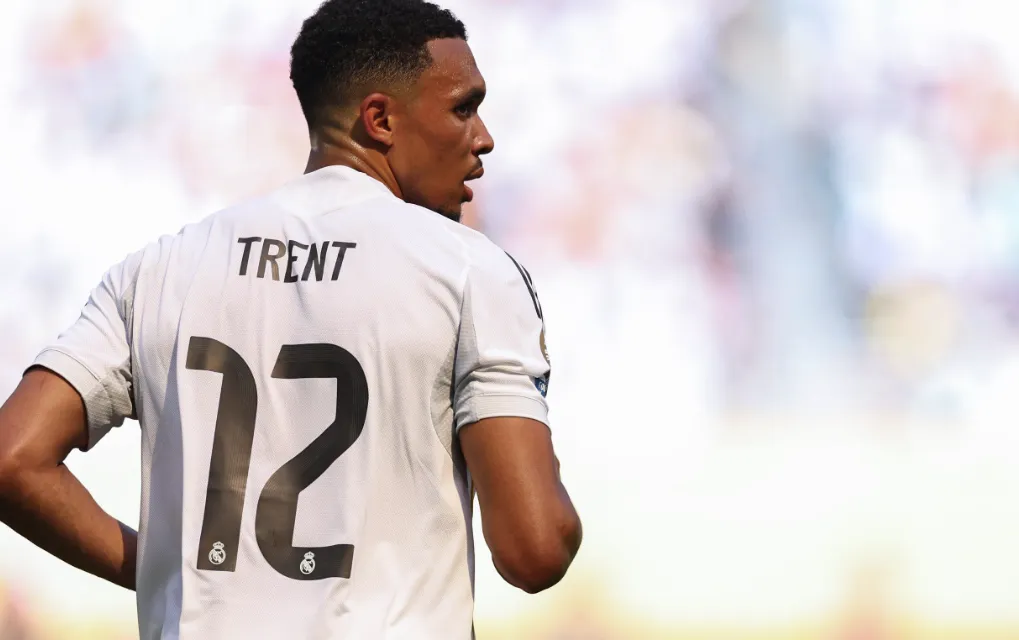
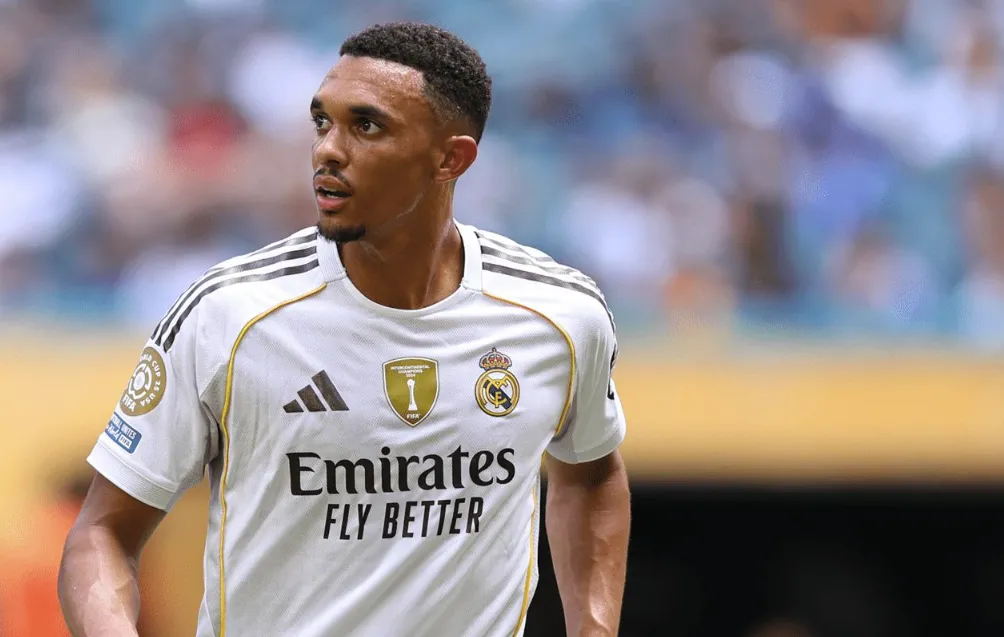
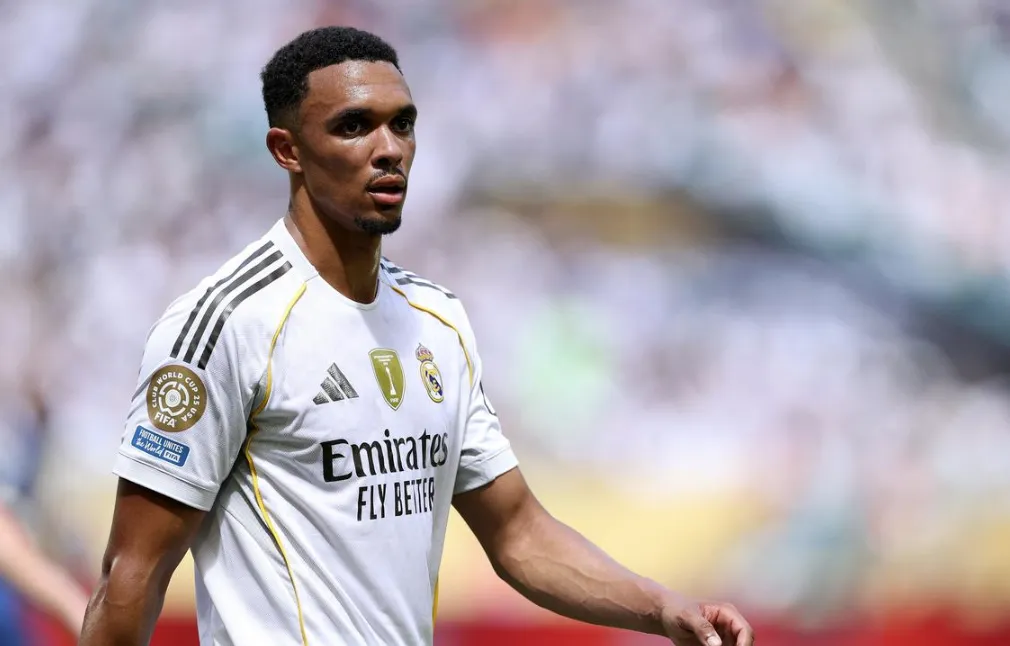
The football world was sent into a frenzy this week with the confirmation that Liverpool’s homegrown hero, Trent Alexander-Arnold, has completed a blockbuster move to Real Madrid. As the Scouser in the White of Los Blancos, he becomes the eighth British player to ever don the famous jersey, a list that blends legendary icons with intriguing what-ifs. For fans following the latest transfer sagas on Jeetwin, this move isn’t just about a new contract; it’s about history, legacy, and the unique challenge of a British player succeeding in Spain.
So, who are the other seven? Let’s take a deep dive into the roll call of British talent that has attempted to conquer the Santiago Bernabéu before Alexander-Arnold made his mark.
The Pioneers and the Icons: The First Wave
Laurie Cunningham (1979–1984)
Alexander-Arnold follows in the footsteps of a true trailblazer. Laurie Cunningham was not just the first British player for Real Madrid; he was a cultural phenomenon. Joining from West Bromwich Albion in 1979, Cunningham was a dazzling winger whose pace and skill lit up the Bernabéu. His time in Madrid was marked by a La Liga title and two Copa del Rey trophies, but it was his style and grace that left an eternal mark. Cunningham’s stint in Spain paved the way for every British player who followed, proving that a player from the British Isles could thrive in the tactical, technical world of Spanish football.
Steve McManaman (1999–2003)
Perhaps the most successful British player ever at Madrid, Steve McManaman arrived on a Bosman free transfer from Liverpool in 1999. Unlike Cunningham, “Macca” became an integral part of the Galácticos era. His high-energy, intelligent play made him a fan favorite. McManaman’s crowning moment came in the 2000 Champions League final, where he scored a stunning volley in a 3-0 victory over Valencia, becoming the first English player to win the European Cup with a non-English club. He won two La Liga titles and two Champions Leagues, setting a gold standard for British exports to Spain that Alexander-Arnold will now be measured against.
David Beckham (2003–2007)
The arrival of David Beckham in 2003 was a seismic event. More than a footballer, Beckham was a global brand, and his transfer represented a perfect marriage of sporting ambition and commercial power. On the pitch, Beckham’s legendary right foot and crossing ability were a natural fit for the Galácticos. While his time in Madrid yielded only a single La Liga title in his final season (2006–07), his impact on the club’s global profile was immeasurable. Beckham’s professionalism and work ethic won over a skeptical fanbase, proving that the “fashion icon” was, above all, a world-class professional.
The Modern Era: Adapting to a New Style
Jonathan Woodgate (2004–2007)
The story of Jonathan Woodgate at Real Madrid is a cautionary tale. Signed from Newcastle United for a hefty fee, Woodgate’s Madrid career was famously derailed by injuries. He missed his entire first season. His debut, a year late, is one of the most infamous in club history: he scored an own goal and was sent off in the same match. Despite moments of obvious quality when fit, Woodgate’s time in Spain was a frustrating battle with his body. He remains a symbol of how even the most talented defenders can struggle in the unforgiving environment of La Liga.
Michael Owen (2004–2005)
Michael Owen joined Real Madrid in 2004, just a year after Beckham, in a shock transfer from Liverpool. Arriving as a Ballon d’Or winner, Owen was expected to be a goal-scoring machine. However, he found himself behind Ronaldo and Raúl in the pecking order, often used as a substitute. Despite this, his goal-scoring record was impressive—13 goals in La Liga during his only season at the club. He was a super-sub, but the lack of consistent starts led him to move on to Newcastle United. Owen’s spell was a classic case of a world-class player at the wrong club in the wrong era.
Gareth Bale (2013–2020)
No British player’s legacy at Real Madrid is as complex or as successful as Gareth Bale’s. Arriving as the world’s most expensive player from Tottenham, Bale’s time in the Spanish capital was a tale of two halves. He delivered iconic moments: the Copa del Rey winner against Barcelona where he ran off the pitch to score, and the breathtaking overhead kick in the 2018 Champions League final against Liverpool (yes, a Liverpool team featuring Alexander-Arnold!). Bale won four Champions League titles, but his relationship with fans, the media, and manager Zinedine Zidane soured. He is a legend by trophies, but a figure of debate by narrative.
Jude Bellingham (2023–Present)
The most recent British success story before Alexander-Arnold, Jude Bellingham has taken the world by storm. Joining from Borussia Dortmund in 2023, Bellingham didn’t just adapt; he dominated. Scoring 19 goals in his first La Liga season, he led Real Madrid to a league and Champions League double, earning him the Kopa Trophy and a Ballon d’Or nomination. Bellingham’s aggression, intelligence, and knack for big goals have made him the new face of the club. He is the living proof that a British midfielder can be the central figure in the modern Real Madrid system.
The Eighth Member: What Does This Mean for Alexander-Arnold?
Trent Alexander-Arnold’s arrival is a statement of intent. At 26, he is in his prime, and he brings a specific skill set that Real Madrid has historically lacked: elite-level chance creation from deep. While players like Dani Carvajal have been superb defensively, Alexander-Arnold offers a unique passing range and tactical flexibility.
The Comparison to the Past:
- The Exit:Like Beckham, McManaman, and Owen, he leaves England at a peak moment. Unlike Bale, he is not arriving as a record signing.
- The Style:He is more of a playmaker than a traditional full-back, similar to how McManaman was more of a roaming creator than a winger.
- The Challenge:He must overcome the defensive scrutiny that frustrated Woodgate. La Liga’s slower, more tactical game might suit his reading of the play, but the physicality of the Champions League will test his 1v1 defending.
Why This Move Works:
Carlo Ancelotti’s system, with Jude Bellingham playing as a box-to-box threat, perfectly complements Alexander-Arnold’s passing. The right-back will have runners like Vinícius Júnior and Kylian Mbappé to aim for from deep. For fans checking the latest odds on Jeetwin, Alexander-Arnold is a strong candidate for the La Liga assists leader. Statistics show that his key passes per 90 minutes over the last three seasons are higher than any other Real Madrid defender.
The Verdict:
History tells us that being a British player at Real Madrid is a high-wire act. You are either a legend (Cunningham, McManaman, Bellingham) or a footnote (Woodgate, Owen to a degree). Bale was both. Alexander-Arnold has the tools to be in the legend category. He has the Liverpool discipline and the creative genius to thrive. The question is not whether he can pass the ball—his passing is arguably the best in England from the right flank—but whether his defensive discipline can handle the relentless pressure of a team that must win every game.
Conclusion: A New Chapter in a Rich History
Trent Alexander-Arnold’s move to Real Madrid writes the eighth chapter in a fascinating story of British players in Spain. From Laurie Cunningham’s pioneering flair to Jude Bellingham’s current dominance, each player has brought a unique piece of British football culture to the Bernabéu.
For Alexander-Arnold, the path is clear. If he can combine his extraordinary attacking output with the defensive grit that Real Madrid demands, he will not just be a trivia answer on a list of eight. He will be the next British icon to lift the Champions League trophy in Madrid. What do you think about this historic transfer? Will he become a legend like McManaman, or will he be remembered as a case of “what if”? Share your thoughts in the comments below! And don’t forget to follow Jeetwin for more in-depth analysis on all the biggest moves in world football.
