
The football world witnessed the end of an era as German midfield legend Toni Kroos officially hung up his boots following a heartbreaking quarterfinal exit at Euro 2024. Known for his unparalleled vision, crisp passing, and ice-cold composure, the Real Madrid icon took to social media to share a heartfelt goodbye. For fans of Jeetwin, this moment marks not just the retirement of a player, but the conclusion of a chapter defined by discipline, precision, and tactical genius.
Kroos, who had already announced his retirement from club football earlier this summer, ended his international career on a bittersweet note. His farewell message, filled with gratitude and reflection, resonated deeply with supporters who grew up watching his masterclasses from the midfield. Let’s dive into what this retirement means for German football and how his legacy will endure.
The Emotional Farewell: Inside Toni Kroos’ Retirement Letter
A Message from the Heart
In a post shared across his social media platforms, Kroos expressed a mix of emotions—pride, thankfulness, and a touch of melancholy. He began by thanking his teammates, coaches, and the fans who stood by him through thick and thin. “It’s been an incredible journey,” he wrote, “and I leave with my head held high.” The letter didn’t just highlight his achievements; it painted a picture of a man who gave everything to the sport he loves.
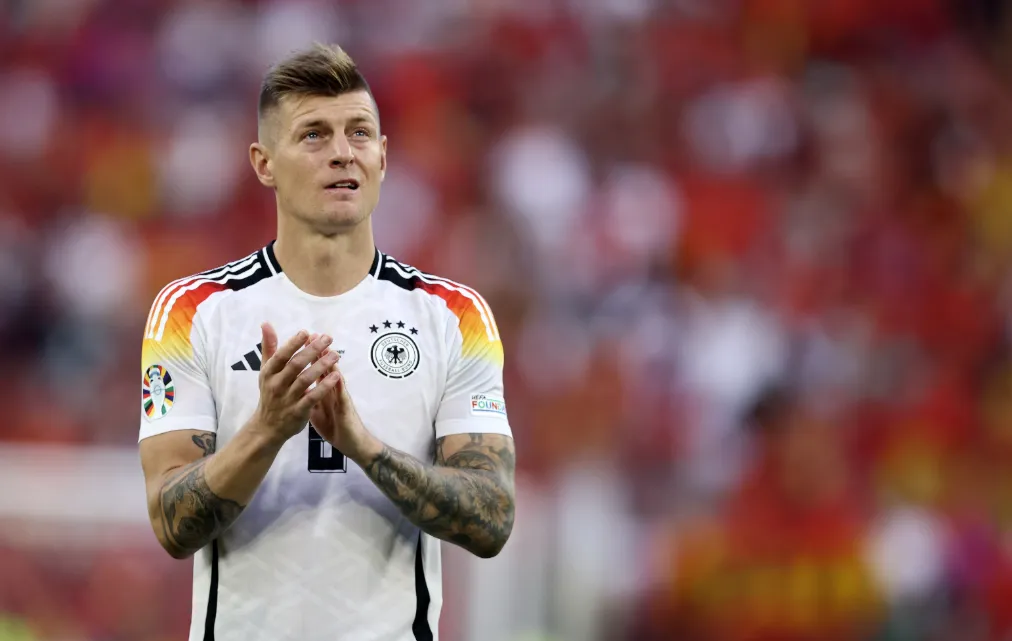
Kroos specifically mentioned his gratitude to the German national team setup, acknowledging the privilege of representing his country at four World Cups and three European Championships. His words were raw and unfiltered, offering a rare glimpse into the psyche of a player often seen as calm and calculating on the pitch.
Reflecting on a Legendary Career
Toni Kroos’ retirement isn’t just a personal milestone; it’s a seismic shift in the landscape of modern football. With 114 caps for Germany and 33 trophies at club level (including six UEFA Champions League titles with Real Madrid), his resume is nothing short of spectacular. His ability to control the tempo of a game, often dictating play from deep central midfield, earned him comparisons to legends like Andrea Pirlo and Xavi Hernandez.
At Jeetwin, we often analyze how such players influence the game beyond stats. Kroos was a conductor of orchestras, a silent general who rarely made headlines for flashy dribbles but consistently delivered match-winning passes. His retirement leaves a void that German football, and the global game, will struggle to fill.
Germany’s Euro 2024 Heartbreak: What Went Wrong?
The Quarterfinal Collapse
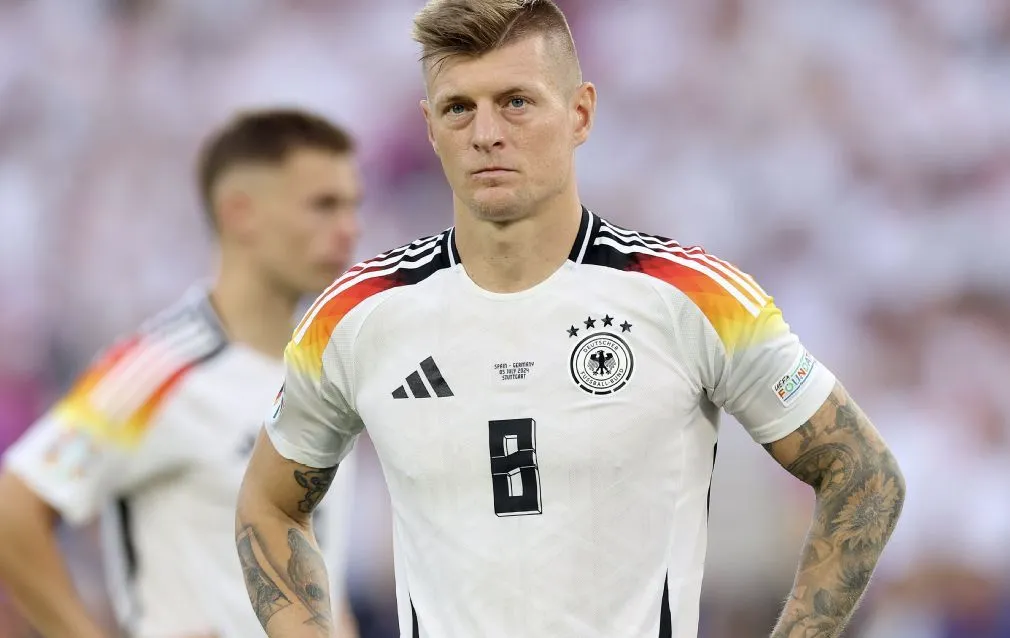
The German campaign at Euro 2024 ended abruptly in the quarterfinals against Spain, a team they had historically dominated in major tournaments. The match was a tactical chess battle, but ultimately, the La Roja’s youthful energy overwhelmed the experienced German side. Kroos, playing his final international match, gave everything until the very last minute, but it wasn’t enough to prevent a 2-1 defeat.
For German fans, the loss stung deeply. Many hoped Kroos could cap his international career with a fairytale ending on home soil. Instead, the tournament served as a painful reminder of the generational transition the national team must undergo. Sports analyst Markus Weber, a renowned voice in European football commentary, noted, “Germany lost more than a match; they lost their midfield anchor. Kroos’ absence will be felt for years.”
The Shift in German Football Philosophy
Under coach Julian Nagelsmann, Germany attempted to blend their traditional physicality with modern possession-based football. However, the squad struggled to find consistency. Kroos’ experience was invaluable in holding the midfield together, but without him, the team often looked disjointed. The retirement signals a clear end to the golden generation that won the 2014 World Cup, forcing the German Football Association (DFB) to rebuild from scratch.
Sources close to the team suggest that younger players like Jamal Musiala and Florian Wirtz are expected to step up, but replicating Kroos’s intelligence and decision-making will be a monumental task. This transition period will be critical for Germany’s chances at the 2026 World Cup.
The Legacy of a True Midfield Artist
Tactical Brilliance and Unmatched Consistency
What set Toni Kroos apart was his football intelligence. He wasn’t the fastest or the strongest, but his positioning was perfect, and his first touch was almost supernatural. His passing accuracy rate often hovered above 90%—even in high-pressure games like Clásicos or Champions League finals. He was a student of the game, meticulously studying opponents to exploit weaknesses.
His ability to execute long-range switches of play with pinpoint accuracy became his signature. In many ways, Kroos modernized the role of the deep-lying playmaker. He proved that you didn’t need to be a defensive destroyer to control a game; you just needed to be smarter than everyone else.
How Real Madrid Will Fill the Gap
At the club level, Real Madrid faces an equally daunting rebuild. Luka Modrić is also nearing the end of his career, and while Federico Valverde and Eduardo Camavinga are excellent talents, they bring different qualities. The Galácticos have been heavily linked with young midfield prospects, but finding a direct replacement for Kroos is a near-impossible task.
Experts predict Madrid may shift toward a more direct, athletic midfield style, relying on quick transitions rather than the patient buildup that Kroos specialized in. This tactical evolution will define Carlo Ancelotti’s next phase at the Bernabéu.
What’s Next for Toni Kroos?
Life Beyond the Pitch
In his retirement letter, Kroos hinted at spending more time with his family and pursuing passions outside football. He has been open about his love for basketball and has previously invested in tech startups. Many expect him to venture into coaching or punditry, given his deep understanding of the game and articulate communication style.
However, Kroos also mentioned that he will never truly leave football. Whether through youth development programs or ambassadorial roles, he intends to give back to the sport that made him a household name. For fans who follow Jeetwin, watching his next chapter unfold will be just as exciting as his playing days.
The Impact on German Youth
Kroos’ retirement should serve as an inspiration for Germany’s youth academies. His story—from Bayern Munich’s youth setup to becoming the most decorated German player abroad—emphasizes the importance of technical development over physicality. The DFB will likely use his career as a blueprint for nurturing future midfield maestros.
Conclusion: Toni Kroos Pens Emotional Post: The End of a Golden Era
As the football community processes the retirement of Toni Kroos, we at Jeetwin recognize that we’ve witnessed a once-in-a-generation talent hang up his boots. His emotional farewell letter was a masterclass in humility and gratitude, reflecting the character of a man who let his football do the talking.
From his World Cup-winning goal against Brazil to his Champions League final performances, Kroos leaves behind memories that will be replayed for decades. The question now is: Who will step into his boots? Share your thoughts on Germany’s future and Kroos’ legacy in the comments below, and stay tuned to Jeetwin for more in-depth football analysis and updates from the world of sports.
