
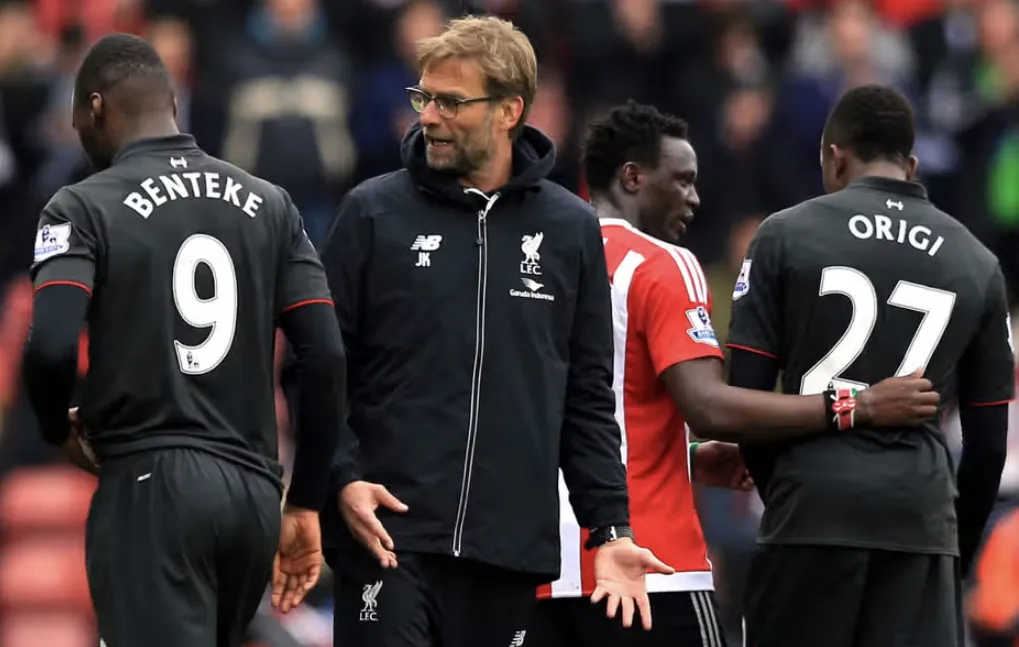
When you think about the Jurgen Klopp era at Liverpool, you picture high-intensity pressing, lightning-fast transitions, and a relentless attacking philosophy that eventually brought Premier League and Champions League glory to Anfield. But not every player who crossed paths with the German tactician managed to fit into that intricate system. Christian Benteke, the powerful Belgian striker who arrived at Liverpool with much fanfare, recently opened up about why his time under Klopp never quite clicked, and his honest assessment sheds light on a fascinating chapter in both their careers.
Speaking exclusively to Jeetwin in a candid interview, Benteke reflected on his short but memorable stint at the club, revealing that the fundamental disconnect boiled down to a simple yet crucial factor: a difference in footballing vision. It’s a story that resonates with many football fans who have watched talented players struggle to adapt to a manager’s specific demands.
The Arrival of a Different Philosophy
When Liverpool signed Christian Benteke from Aston Villa in the summer of 2015 for a hefty £32.5 million, the club was in a state of flux. Brendan Rodgers, who had brought the striker in, was trying to rebuild a team that had come close to winning the title just a year earlier. However, by October 2015, Rodgers was gone, and in stepped Jurgen Klopp.
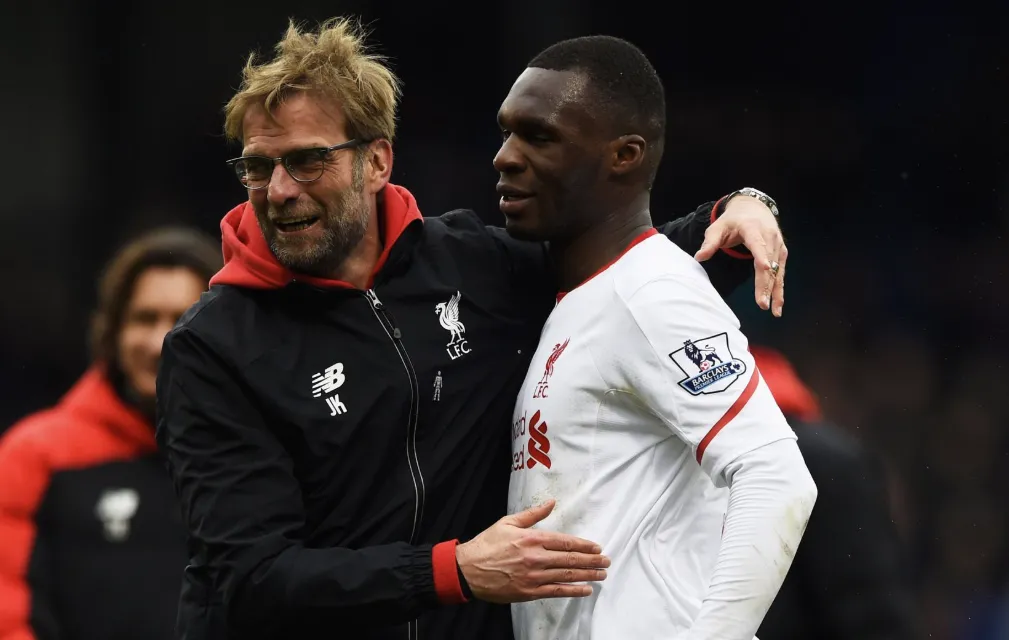
Benteke found himself in a peculiar position. He was a classic target man, exceptional at holding up the ball and finishing crosses with his head or powerful left foot. Klopp’s philosophy, however, demanded something entirely different. The German manager wanted his forwards to lead the press from the front, run tirelessly into channels, and be the first line of defense. For a player of Benteke’s profile, this was like trying to fit a square peg into a round hole.
A Striker’s Confession: “It Wasn’t the Same”
In his interview with Jeetwin, Benteke didn’t hold back. He admitted that while he respected Klopp immensely as a person and a manager, the tactical demands were simply not suited to his natural game. “He had his own vision, and I had my own style,” Benteke explained. “We didn’t have the same vision of football. It’s not that he was wrong or I was wrong. It just wasn’t a match.”
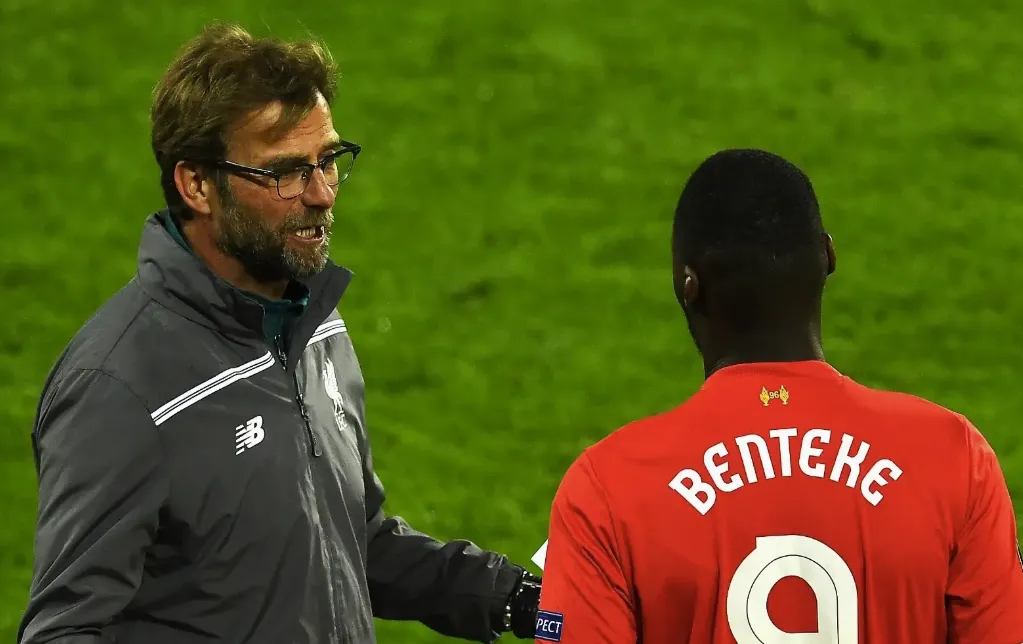
This honesty is refreshing in a world where players often give diplomatic answers. Benteke pointed out that Klopp’s system required a striker who could drop deep, link play, and then sprint back to press the opposition’s defenders. For someone who thrived on receiving service in the box, it was a frustrating period. The Belgian scored ten goals in 42 appearances across all competitions under Klopp—a respectable return for a struggling side, but far from what was expected.
Why Big Players Struggle to Fit In
Benteke’s situation is not unique. Football history is filled with talented players who couldn’t adapt to a new tactical system. What made this particular case interesting was the sheer contrast in styles. Klopp’s Liverpool was built on the concept of “gegenpressing”—essentially, winning the ball back immediately after losing it. This meant the striker had to be the first man to close down the goalkeeper and defenders.
For Benteke, a player who had scored goals by being a penalty-box predator, this was uncharted territory. He was never going to be a speedy runner who chased lost causes. Instead, he was a finisher, a player who thrived on service from wide areas. Under Klopp, those wide crosses became less frequent as Liverpool focused on through balls and quick combinations.
The Emotional Toll of Being Misunderstood
Beyond the tactical mismatch, there was an emotional component. Benteke revealed that the situation affected his confidence. When a player feels they cannot perform the tasks asked of them by a world-class manager, doubt creeps in. “I remember thinking, ‘Do I really belong here?'” Benteke admitted. It’s a powerful reminder that football isn’t just about physical ability; it’s about psychological fit and understanding.
This is a key insight for any Jeetwin reader looking to understand the complexities of professional football. The game is not always about talent; it is about timing, environment, and the match between a player’s strengths and a manager’s requirements.
What Happened Next?
Christian Benteke eventually left Liverpool for Crystal Palace in 2016, where he rediscovered his form, scoring 15 goals in his first season. He became a fan favorite at Selhurst Park, proving that his abilities were never in question. It was simply a case of being in the wrong place at the wrong time under a manager who had a different blueprint.
Jurgen Klopp, of course, went on to build one of the most formidable teams in world football. He replaced Benteke with players like Roberto Firmino, whose tireless running, pressing ability, and link-up play perfectly embodied Klopp’s vision. Firmino became the quintessential false nine, a role that Benteke could never have filled.
Lessons Learned for Fans and Analysts
So, what can we take away from this story? For one, it reminds us that not every transfer failure is a reflection of a player’s quality. Sometimes, it is purely a matter of compatibility. Benteke remains a respected Premier League striker, and his honesty on this topic shows maturity and self-awareness.
For fans analyzing the game, it is crucial to look beyond Goals and assists. The question should always be: “Does this player fit the system?” If the answer is no, no amount of talent can mask that mismatch.
Conclusion
The story of Christian Benteke reveals why Jurgen Klopp’s vision at Liverpool did not align with his own is a fascinating case study in modern football management. It highlights that even the most talented players can struggle when their natural style conflicts with a manager’s tactical demands. Jeetwin readers who follow the beautiful game know this struggle all too well—whether you’re a fan debating transfers or a player considering a move, the right fit is everything.
What do you think? Have you ever seen a player who looked perfect on paper but just couldn’t make it work at a club? Share your thoughts in the comments below, and don’t forget to explore more in-depth football analysis right here on our website. The conversation doesn’t end here—let’s keep talking about the tactics, the players, and the moments that make football truly unforgettable!
